Making a home feel welcoming means balancing several factors: materials, light, circulation and air quality. Interior design pages often discuss colours and textiles in isolation, without considering how these choices affect a small, poorly ventilated space.
The Île-de-France Regional Health Agency points out that certain furniture, household products and combustion appliances contribute to indoor air pollution, and that a cosy home should also be a healthy one. This article looks at the practical trade-offs between aesthetics, comfort and liveability.
Interior design and indoor air quality: an overlooked trade-off
Filling a poorly ventilated room with textiles, scented candles and new furniture can worsen the air you breathe every day. Adhesives in particleboard, flame-retardant treatments on some fabrics and synthetic waxes release compounds that linger in a home where windows and doors remain closed.
Before adding a decorative item, start by asking whether the space is properly ventilated. The Île-de-France Regional Health Agency recommends airing rooms regularly and keeping ventilation systems in good working order. In a studio or one-bedroom apartment, this means not blocking air vents with furniture or heavy curtains.
Resources dedicated to interior design offer ideas for combining comfort with these practical considerations. Visit https://www.be-at-home.fr to explore different design approaches suited to today’s homes.
Choosing raw or minimally processed materials (solid wood, washed linen, untreated wool) helps reduce indoor emissions. A cosy living room doesn’t need ten synthetic cushions: three carefully chosen natural-fibre textiles are better than a pile of them.
Natural light in a small space: don’t block the windows
Soft ambient lighting is a staple of interior design. Table lamps, string lights and dimmer switches: most advice focuses on artificial light. But in a small home, natural light is the most valuable resource—and the easiest to waste.
Curtains and furniture near windows
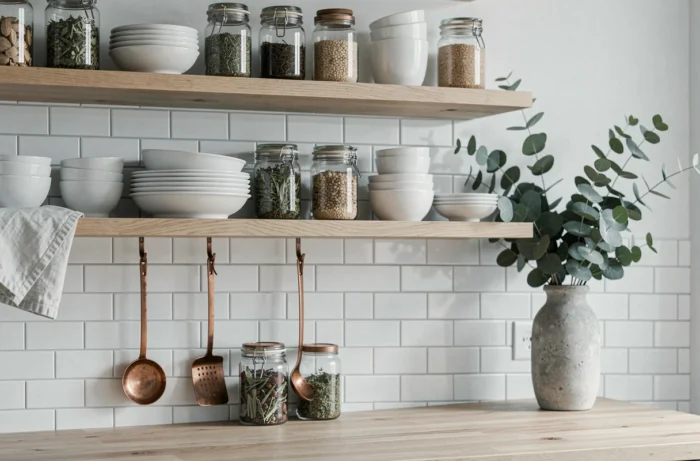
A bookcase placed perpendicular to a window, blackout curtains left closed during the day or a tall shelf in front of a glass door can dramatically reduce the amount of light in a room. Keeping windows clear improves both natural light and the sense of space.
To create a cosy atmosphere without blocking daylight, lightweight linen or cotton sheers filter the light while softening the room. Light colours on the walls near windows reflect light back into the space, helping to brighten darker corners.
Artificial lighting: add more light sources, not more power
Three separate light sources—a reading lamp, indirect lighting behind a piece of furniture and a pendant above the table—create more depth than one powerful ceiling light. This layered approach works in spaces of any size, including rooms smaller than twenty square metres.
- Table lamps at seated height for relaxation areas, with a natural-material shade (rattan or fabric) to diffuse the light
- Indirect lighting (an LED strip behind a shelf or beneath a low cabinet) to make the room look larger without glare
- A pendant or wall light above the table or worktop, ideally with adjustable brightness
Furniture and circulation: tailor your décor to the space you have
Modular furniture—a drop-leaf table, fold-down desk or storage bench—often seems like the ideal solution for small spaces. When unfolded, a piece of furniture should still leave enough room to move around comfortably. Check how much space it takes up when fully open, accounting for doors, drawers and pulled-out chairs, to avoid unnecessary purchases.
In compact homes, the flow between areas (entryway, living room and kitchen) matters just as much to comfort as the choice of sofa. An oversized rug that catches on the door, a coffee table you have to walk around or an armchair blocking the way can turn a home designed to feel cosy into a frustrating space for everyday living.
Repurposing furniture: a practical option
Near Nantes, a Franceinfo report describes how old furniture is being transformed to suit today’s homes and lifestyles. Cutting a family wardrobe in half to create two low units, sanding and staining a 1960s sideboard or turning a chest of drawers into a vanity unit: reusing furniture meets practical needs while supporting sustainability.
This approach also creates one-of-a-kind pieces that add character to a home, unlike generic flat-pack furniture. Timeworn wood brings a visual warmth that is hard to replicate with new materials.
Warm colours and atmosphere: use them selectively
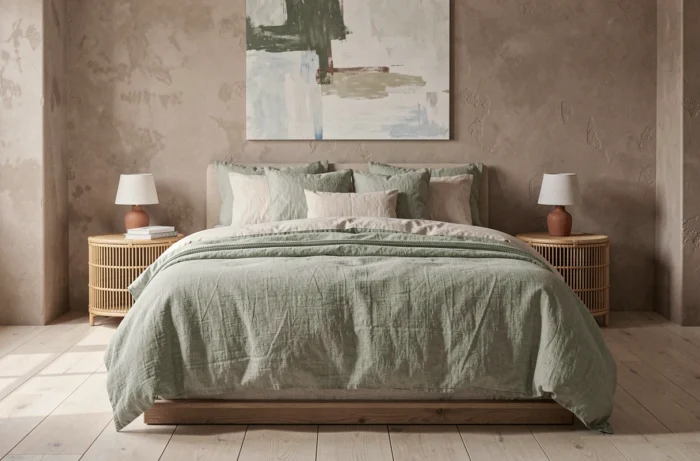
Terracotta, ochre, chocolate brown and sage green feature in most interior design guides. The pitfall is using them on every surface in the same room, which can make the space feel darker and heavier—especially in a north-facing home or one with small windows.
A single warm-coloured accent wall is enough to set the mood in a living room. Keep the other walls neutral (off-white, beige or very light grey) to preserve brightness. Then echo the accent colour in small touches through cushions, throws and ceramics, without overwhelming the room.
- A terracotta wall behind the sofa, paired with natural linen textiles and a mustard wool throw
- Off-white walls with a jute rug, an olive-green velvet armchair and light-wood shelves
- An ochre accent wall in the entryway to warm up the first impression without darkening the adjoining living room
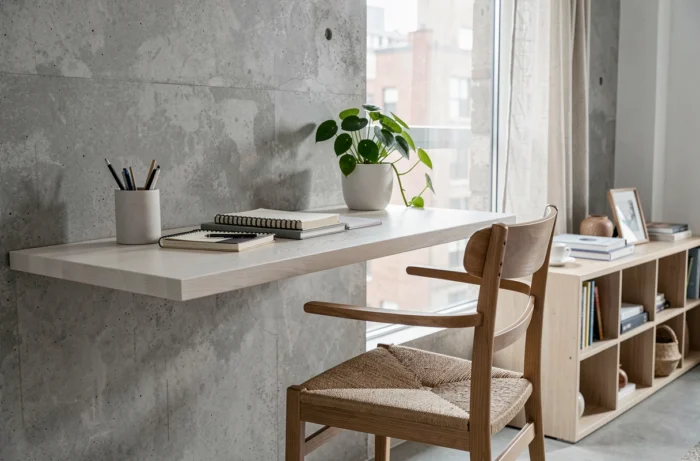
A home’s atmosphere depends as much on what you remove as on what you add. An uncluttered, well-ventilated space with a few carefully chosen materials and plenty of natural light feels warmer for longer than a living room crowded with decorations. A home’s comfort is measured in everyday life, not in a photograph.