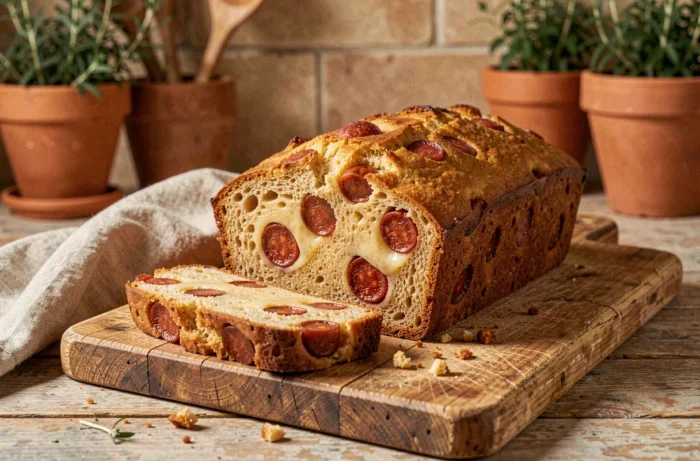
The moist chorizo cake relies on a precise balance between dough hydration, managing the fat released by the charcuterie, and mastering the cooking process. Failing to get one of these parameters right results in a dry, compact, or oily outcome. Here are the technical points that make the difference.
Dough Hydration: The Liquid-Fat Ratio That Changes Everything
A savory chorizo cake is not managed like a sweet cake. The chorizo releases fat during cooking, which alters the water balance of the dough. Ignoring this transfer of fat leads to a heavy or oily result at the bottom of the mold.
To compensate, reduce the amount of oil added compared to a classic savory cake recipe for better results. With a fatty charcuterie like spicy chorizo, a few centiliters of olive oil are sufficient. Whole milk is preferable to semi-skimmed milk: it provides emulsified fat that stabilizes the crumb without saturating it.
The other underestimated variable is the flour. A T55 wheat flour, standard in savory pastry, absorbs liquid well. But if you want to succeed in making a chorizo cake with a really airy crumb, sift the flour with the baking powder to incorporate air right from the dry mix. This simple gesture improves the rise without altering the proportions.
- Sift flour and baking powder together before adding them to the beaten eggs
- Use whole milk at room temperature to facilitate emulsification
- Reduce the oil by a third if the chosen chorizo is particularly fatty (check the label)
Preparing the Chorizo Before Incorporation: Sweat, Blot, Flour
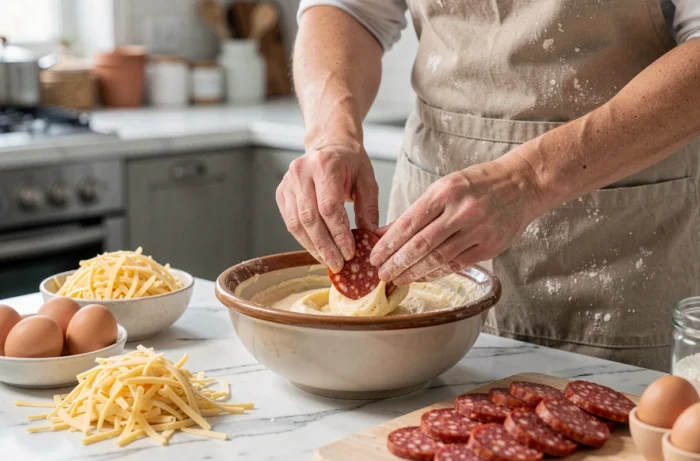
Poorly prepared chorizo ruins the texture of the cake. Three separate steps address the most common issues: the filling sinking to the bottom, excess orange fat in the crumb, and rubbery pieces.
Sweat the diced chorizo dry
Cut the chorizo into small cubes after removing the skin. Sauté them in a pan without fat for two to three minutes. This dry cooking releases fat and begins to color the chorizo, adding crunch after baking.
Immediately blot the cubes on paper towels. This step removes the excess fat that would otherwise migrate into the dough and create oily pockets.
Flour the cubes to prevent sinking
Once the cubes are cooled and blotted, coat them with a thin layer of flour. The flour creates a mechanical adhesion with the dough and prevents the filling from sinking during the rise. Shake off the excess in a sieve before incorporating the cubes into the mixture.
This principle also works for olives or cheese cubes added as variations.
Baking the Chorizo Cake: Temperature and Knife Test
Baking is the moment when most savory cakes tip from moist to dry. An oven that is too hot forms a thick crust before the center is cooked. The reflex to raise the temperature to save time is counterproductive.
Preheating the oven to a moderate temperature allows for even cooking. The cake should rise evenly, without excessive doming or deep cracks. If the surface browns too quickly, covering the mold with aluminum foil during baking protects the crust without interrupting the rise of the crumb.
The knife test remains the most reliable way to check for doneness. The blade should come out dry, possibly with a few crumbs, but without any liquid batter. A cake removed too early will collapse as it cools. A cake left too long will dry out irreparably.
Unmolding and Resting
Let the cake rest for about ten minutes in the mold before turning it out onto a rack. This resting time allows the structure to stabilize. Immediate unmolding of a still fragile cake can cause breakage.
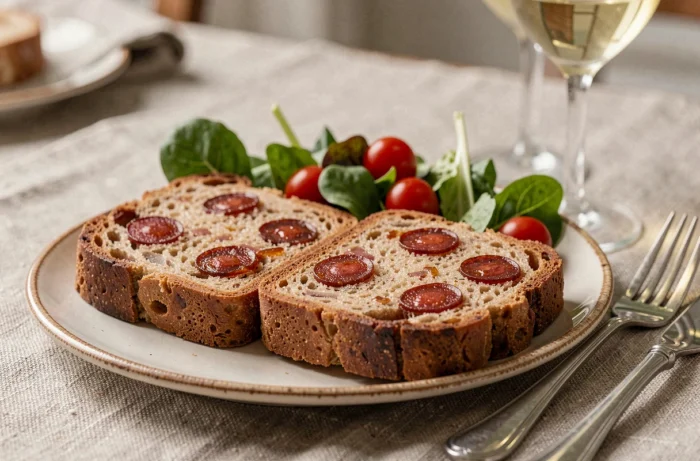
Serving the chorizo cake warm is the best option for an appetizer. The crumb retains its moisture, and the flavors of the chorizo are more expressive than at room temperature.
Cheese and Variations: Adapting the Filling Without Disrupting the Dough
Grated Gruyère or Comté are classic choices for a chorizo cake. Their role goes beyond flavor: melted cheese creates an internal binder that helps maintain the structure of the crumb. A cake without cheese will be more crumbly.
For variation, crumbled feta or fresh goat cheese add acidity that contrasts well with the spiciness of the chorizo. But these cheeses contain more water than Gruyère. Compensate by slightly reducing the milk to maintain overall hydration.
- Gruyère or Comté: melt well, provide binding, do not alter the liquid ratio
- Feta: crumble coarsely, reduce the milk, do not salt the dough
- Green or black olives: drain and flour them like the chorizo
- Confited peppers: blot them carefully to avoid excess moisture
Adding sun-dried tomatoes works as long as you choose those preserved in oil, drained, and cut into small pieces. Too many moist ingredients turn the cake into a flan.
Chorizo and Health: A Few Points of Caution
Chorizo is still a charcuterie. Anses noted in a July 2022 report an association between exposure to nitrites and nitrates and the risk of colorectal cancer. Versions labeled “no added nitrites” are not exempt from caution according to this same assessment.
For a cake intended for an occasional appetizer, the amount of chorizo per serving remains moderate. The cheese and charcuterie already provide enough salt to forgo any additional salt in the dough. Taste before salting.
During pregnancy, chorizo must be cooked thoroughly. A cake baked in the oven meets this requirement, provided that it is fully cooked. Simply adding chorizo after cooking, for decoration for example, is not suitable for pregnant women.
The chorizo cake keeps for two to three days in the refrigerator, wrapped in plastic wrap. A quick pass in the oven before serving restores its moisture without drying it out.