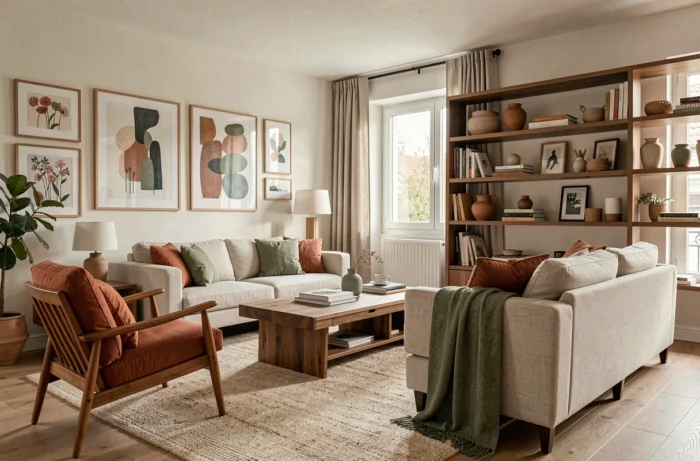
Customized decoration is no longer limited to photo prints on canvas. The market is driven by print-on-demand, increased sustainability requirements, and a European regulatory framework that pushes manufacturers towards traceability. Here are ten concrete ideas, chosen for their technical relevance and their ability to truly transform a room.
1. Printed wall mural in a single panel
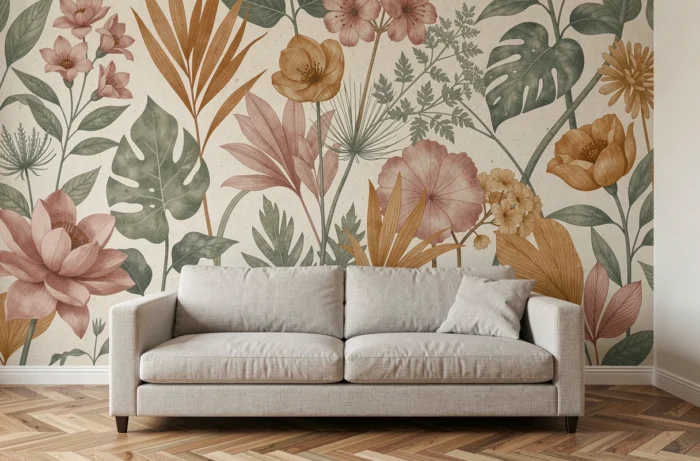
The single panel, printed on non-woven or expanded vinyl, replaces connected wallpaper rolls. The source file must reach a minimum resolution suitable for large format to avoid blurriness in latex or UV printing. We recommend working from a high-definition photo or a vector creation.
The advantage over a framed poster: the mural covers an entire wall without a frame or glass, eliminating reflections and heavy mounting constraints. The rendering radically changes the atmosphere of a living room or bedroom.
Professionals specializing in this type of custom creation offer their services online, such as https://www.decoration-flb.com/, which assists individuals in choosing materials and finishes suited to each wall surface.
2. Custom-cut parametric wooden screen
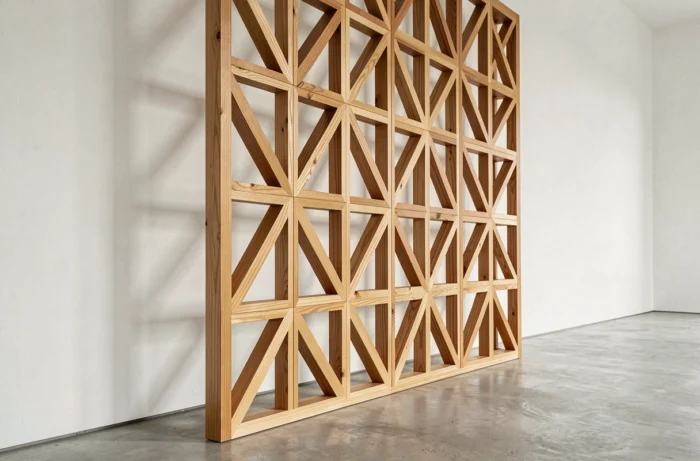
CNC cutting allows for the production of screens with custom patterns from birch, oak, or veneered MDF panels. The parametric design adapts to the exact dimensions of the room, eliminating approximate adjustments.
A custom screen structures the space without blocking light. It advantageously replaces a separating piece of furniture in an open living room or studio. The choice of wood type and panel thickness determines both the strength and the delicacy of the pattern.
3. Tinted polished concrete for countertops or backsplashes
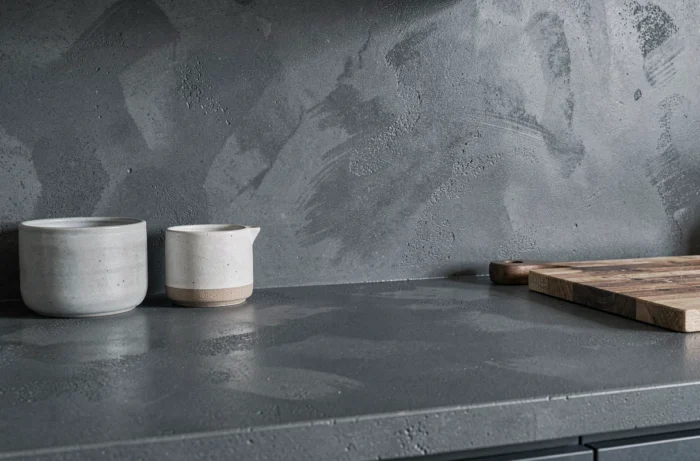
Tinted polished concrete offers an almost unlimited palette thanks to mineral pigments. Customization focuses not on a pattern but on the exact shade, calibrated to match existing furniture.
The application requires a suitable primer for the substrate (tiles, wood, drywall) and a minimum of two coats with intermediate sanding. The waxed or varnished finish determines the level of gloss and stain resistance. For a kitchen backsplash, food-grade polyurethane varnish remains the only viable long-term option.
4. Upholstery fabric printed on demand
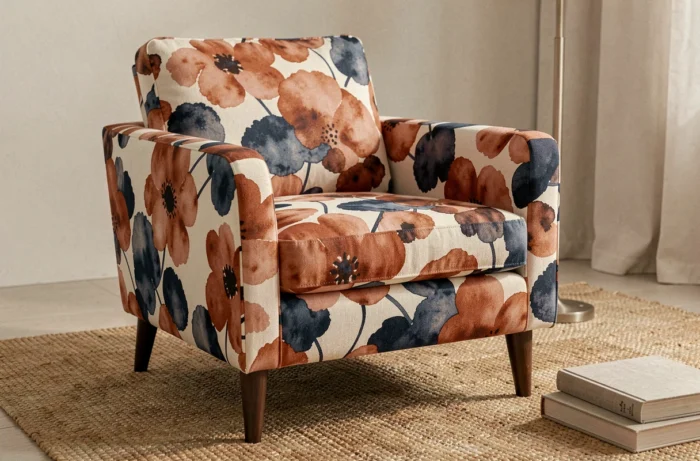
Textile print-on-demand has transformed access to customized fabrics. Cushions, curtains, duvet covers: the pattern is printed individually on linen, cotton, or recycled polyester, with no minimum order.
The technical point to watch is the color fastness to washing. Pigment printing withstands repeated cycles better than sublimation on natural fibers. We observe that buyers now demand information on the origin of the fabric and care instructions, a reflex reinforced by the upcoming introduction of the European product digital passport.
5. 3D printed light fixture with custom diffuser
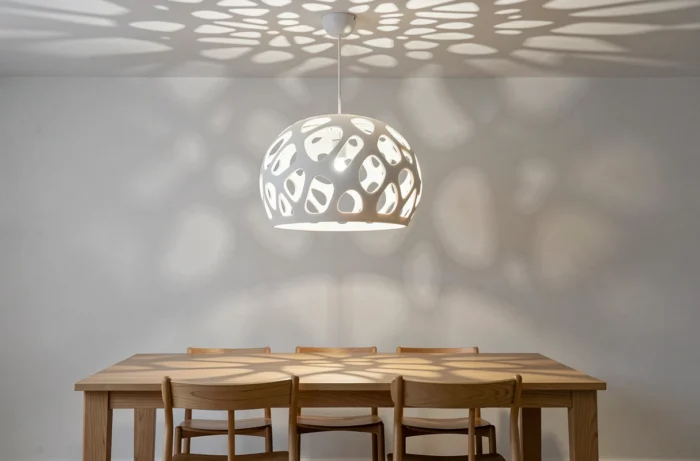
3D printing in translucent PLA or resin allows for the design of lampshades and pendants in shapes that are impossible to mold industrially. The diffuser filters light according to its thickness and geometry, making each piece unique.
The choice of filament affects thermal stability near the bulb. PETG withstands heat better than standard PLA. For a living room pendant, we recommend an LED bulb with a low operating temperature.
6. Modular wall gallery with aluminum rail
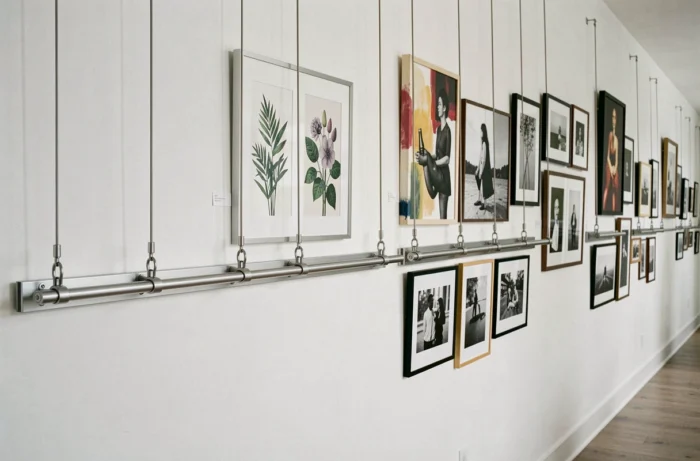
The anodized aluminum rail fixed at the top of the wall allows for hanging frames, photos, and illustrations without drilling with each change. The cable and sliding hook system allows for repositioning in seconds.
This approach is suitable for interiors where decoration often evolves: children’s rooms, offices, entries. It also protects drywall, which is often weakened by repeated fixings. Customization comes from the choice of prints, their seasonal rotation, and the mixing of formats.
7. Site-cast terrazzo with selected aggregates
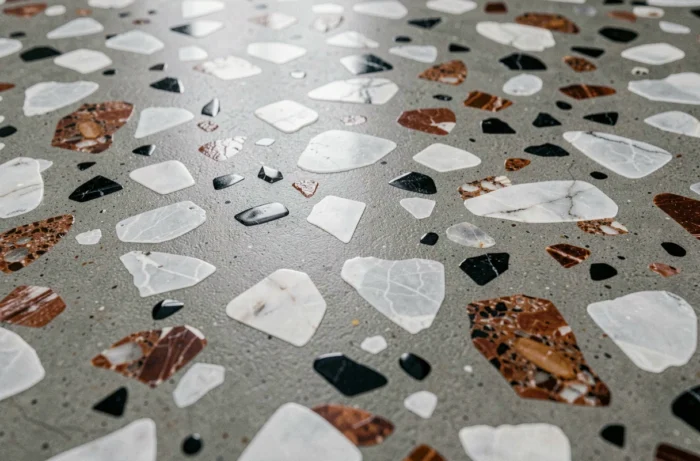
Terrazzo is making a strong comeback, but the site-cast version stands out from imitation tile. The contractor chooses the size, color, and type of aggregates (marble, recycled glass, brass) as well as the tinted binder.
The result is a monolithic floor without joints, personalized even in the distribution of chips. Site-cast terrazzo requires a perfectly level substrate and a minimum thickness of a few centimeters to ensure strength. Final diamond polishing reveals the aggregates and gives the desired shine.
8. Staff moldings redrawn by 3D scan
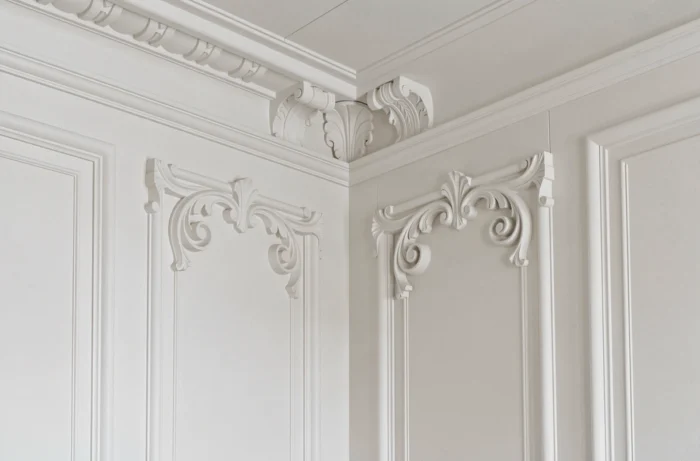
The 3D scan of an existing molding allows it to be reproduced identically or reinterpreted with profile modifications. Staff (fiber-reinforced plaster) remains the reference material for cornices, rosettes, and frames.
This technique is particularly interesting for renovations of old apartments where some moldings have disappeared or are damaged. Customization involves adapting the original design to current tastes, for example by simplifying an overly ornate profile or adding a contemporary geometric pattern.
9. Built-in storage with wood veneer front
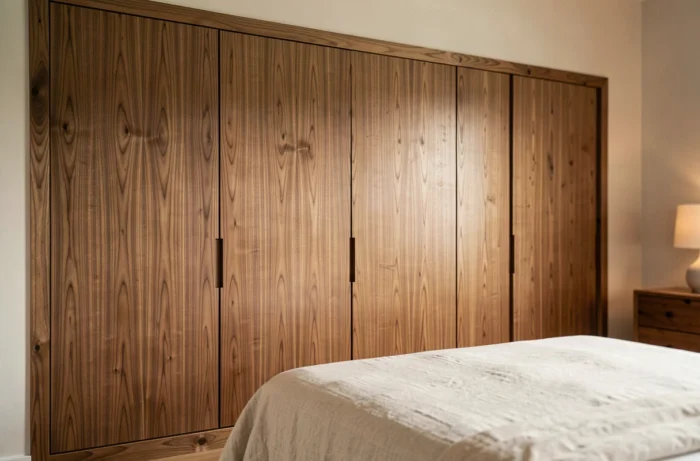
A custom built-in storage unit with a wood veneer front creates a visual continuity across an entire wall. The veneer allows for the selection of wood type (walnut, ash, smoked oak) and grain direction for a homogeneous material effect.
Aligning the grain between adjacent panels requires precise cutting and assembly in the workshop before installation. The result gives the impression of a dressed wall rather than an added piece of furniture, freeing up visual space in a bedroom or living room.
10. Pigmented lime plaster applied in polished stucco
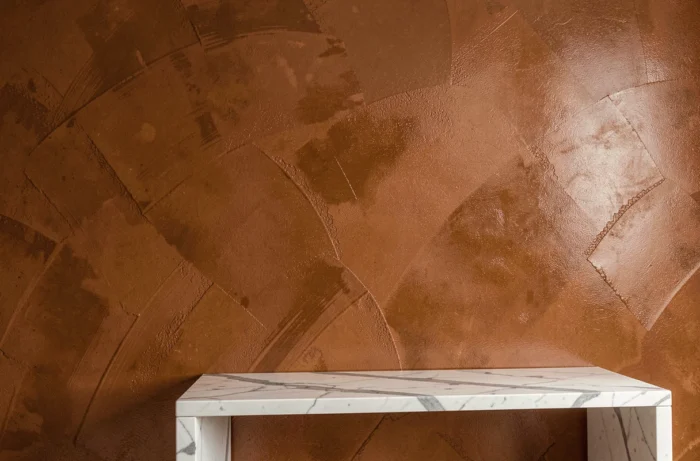
Polished stucco is a technique for applying lime plaster that produces a depth and shine effect similar to polished marble. Natural pigments (iron oxides, colored earths) are directly integrated into the mixture.
The application is done in several thin passes, each polished with a stainless steel trowel to compress and smooth the material. The final pass, performed on still fresh plaster, causes the lime to rise to the surface and creates the characteristic shine. It is a durable, breathable wall finish, and the exact shade remains unique to each project.
Each of these ten ideas relies on precise technical know-how and a genuine approach to customization, far from generic decorative objects. The common thread remains the same: an interior that reflects you requires thoughtful choices of materials and implementation, not just a catalog of trends.