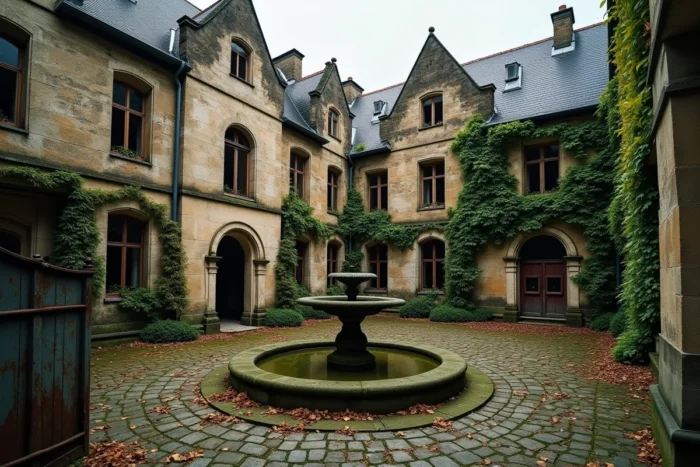
Every year in France, a few abandoned castles are offered for sale for a symbolic euro. The principle seems simple: a municipality or an owner transfers a dilapidated building to a buyer who commits to restoring it. In reality, these operations remain rare, governed by strict conditions, and the actual cost of acquisition far exceeds the advertised sum. Understanding the legal and financial mechanisms at play prevents turning a heritage project into a financial pit.
Calls for projects at 1 euro: short and selective windows of opportunity
The first reality that viral announcements do not mention is the episodic nature of these schemes. The programs for transfer at one euro are not permanent catalogs. A municipality publishes a call for projects for a few months, selects one or two proposals, and then closes the procedure without any guarantee of renewal.
Each community sets its own criteria: requirement for primary residence, maximum time frame to start work, nature of the project (cultural, tourism, housing). A serious candidate must check the publication date of the official notice, confirm that the procedure is still open, and read the specifications in full.
Finding an abandoned castle for sale for 1 symbolic euro therefore requires active monitoring of municipal and prefectural websites, not just a simple search on traditional real estate portals.
The recent trend is towards a selection based on financial documentation, not just the candidate’s enthusiasm. Municipalities are increasingly asking for proof of financial capacity and a detailed renovation plan before even considering the project. Without demonstrable funding and without an architect’s estimate, the application is dismissed at the first screening.

Actual costs of a castle to renovate: what the symbolic price does not cover
The main trap of these operations lies in the gap between the displayed purchase price and the total project budget. An abandoned castle for several decades accumulates severe structural issues: collapsed roof, cracked load-bearing walls, widespread infiltration. The cost of restoration work can reach several million euros, depending on the size and condition of the building.
In addition to these construction costs, there are often underestimated expenses:
- Preliminary diagnostics (asbestos, lead, termites, soil study) represent a budget item to be accounted for even before the first shovel hits the ground, especially for buildings dating back several centuries.
- The fees of a heritage architect, mandatory when the property is classified or listed as a historical monument, significantly increase design costs compared to a standard renovation.
- Property taxes and ongoing maintenance costs (site security, clearing, insurance) start accruing as soon as the contract is signed, even if the work does not begin immediately.
A complete structural audit before purchase remains the only way to obtain a realistic estimate. Field reports vary on this point: some buyers discover major hidden defects (soil pollution, presence of asbestos in coatings) after the sale, due to not having commissioned an independent expert beforehand.
Historical monument status and regulatory constraints on renovation
The majority of castles offered for one euro are classified or listed as historical monuments. This status grants access to subsidies (Regional Directorate of Cultural Affairs, Heritage Foundation, Heritage Lottery), but it also imposes a strict regulatory framework that weighs on every construction decision.
Permits and work control
Any modification project must receive the approval of the architect of the buildings of France. This concerns the materials used, restoration techniques, colors, and even the nature of the joinery. A refusal or a request for modification can delay a project by several months. The processing times for work permits on historical monuments often exceed those of a standard building permit.
Resolutory clauses in the sales contract
Sales contracts for one euro almost always contain resolutory clauses related to a work schedule. If the buyer does not meet the deadlines set (often two to five years for the initial phases), the municipality can reclaim the property without compensation. This mechanism protects communities against speculative buyers, but it imposes real financial and logistical pressure on the buyer.

Legal checks before purchasing an abandoned castle
An abandoned castle is not necessarily a property without an owner. In many cases, the title of ownership is fragmented among several heirs, sometimes unidentified. A resolved co-ownership situation can block the sale for years, with the costs of heir research borne by the potential buyer.
Easements are another common blind spot. Rights of way, view easements, obligations related to waterways crossing the property: these elements are included in the notarial deeds, but their reading requires special attention. A notary specialized in rural or heritage real estate will identify risks that a generalist might overlook.
The question of land ownership also deserves separate examination from that of the building. Some castles are sold without the adjacent land, or with parcels encumbered by ongoing rural leases. Checking the land registry and existing leases avoids unpleasant surprises after signing.
Purchasing a castle for one euro remains a long-term heritage operation, not a classic real estate bargain. Buyers who successfully carry out these projects are those who approach the file with a realistic budget, a work schedule validated by heritage professionals, and a precise understanding of the contractual obligations that accompany the transfer. The entry price is negligible, but the commitment that follows is not.