
A seller presenting a blank administrative situation certificate often thinks they have secured their transaction. The buyer, for their part, relies on this document to confirm the absence of liens or opposition on the vehicle. The non-lien certificate fulfills this role well, but it only covers part of the actual risks involved in a used car sale.
Checks that the non-lien certificate does not cover
We regularly encounter situations where the sale becomes complicated even though the administrative situation certificate is perfectly blank. The document certifies the absence of liens and opposition to the transfer of the registration certificate, nothing more.
It does not verify the match between the seller’s identity and the name registered on the registration certificate. Identity theft, a vehicle sold by an unauthorized third party, or a registration certificate with a name that does not match the transfer form are all cases where the non-lien certificate does not trigger any alerts.
The document also says nothing about the mechanical condition, maintenance history, or actual mileage. To understand precisely what the non-lien certificate is for, one must accept its limitations: it is an administrative filter, not a complete audit of the transaction.
Points to verify yourself before signing
- Compare the name on the registration certificate with the seller’s ID. If the names differ (in the case of an inherited vehicle, a divorce, or a power of attorney), require written proof before any transfer.
- Check that the registration number on the administrative situation certificate matches the one engraved on the plate and listed on the registration certificate.
- Ensure that the technical inspection is less than six months old for a vehicle over four years old, as this document also conditions the validity of the sale.

Liens and opposition on a vehicle: concrete consequences for the buyer
When the certificate mentions a lien, it means that a credit institution holds a guarantee on the vehicle. In practice, a pledged vehicle cannot change ownership until the credit is settled or the creditor has given their written consent.
The opposition can come from various sources: unpaid fines, a court decision, reported theft. The result is the same. Any opposition blocks the transfer of the registration certificate, and the buyer ends up with a vehicle they cannot register in their name.
Sometimes we see buyers signing on the same day, convinced that the situation will be resolved. The seller promises to settle their credit in a few days. Without proof of the effective lifting of the lien (a new blank administrative situation certificate), the buyer is taking a real risk. The vehicle remains legally tied to the previous owner.
What to do in the face of a declared lien
The most reliable approach is to ask the seller to settle their debt before the sale, then generate a new certificate. This document must be dated less than 15 days at the time of the transfer. An older certificate may no longer reflect the actual situation of the vehicle.
Responses vary on the speed of lifting a lien: some credit institutions take a few days, while others take several weeks depending on the complexity of the case. It is better not to set a sale date until the new blank certificate is in hand.
Transfer declaration and acknowledgment of registration: the seller’s protection after the sale
The non-lien certificate mainly protects the buyer. For the seller, real security comes from elsewhere. The transfer declaration severs the legal link between the seller and the vehicle. Without this step, the seller remains responsible for any offenses committed with the vehicle after the sale.
We all know a classic scenario: someone sells their car, does not declare the transfer, and receives fines for months. Contesting is possible, but it is long and tedious. The transfer declaration must be registered online shortly after signing.
Documents to gather from the seller’s side
- The administrative situation certificate dated less than 15 days, which must be provided to the buyer before signing.
- The Cerfa transfer declaration form, filled out in two copies (one for each party).
- The registration certificate crossed out with the mention “sold on” followed by the date and time, signed by the seller.
- The acknowledgment of registration obtained after the online declaration, confirming that the administration has duly recorded the change of ownership.
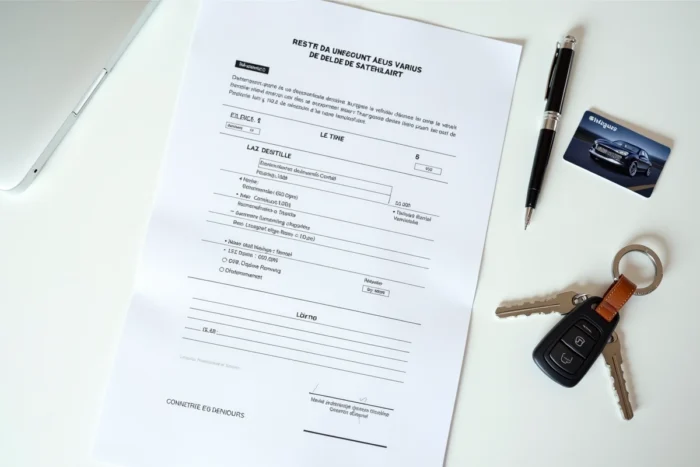
Online administrative situation certificate: validity and common pitfalls
The certificate can be obtained for free on the official website of the Ministry of the Interior. The process takes a few minutes. You enter the registration number, the date of first registration, and the identity of the holder as they appear on the registration certificate.
The most common pitfall concerns entering the holder’s name. The name must exactly match that on the registration certificate, including spaces. A typing error is enough to block the generation of the document. On older registration certificates, the name format may differ from that of current identity documents.
Another often overlooked point: the certificate applies to a motor vehicle already registered in France. For an imported vehicle or one never registered in the territory, the procedure differs, and the classic non-lien certificate does not apply.
The free nature of the official service deserves to be emphasized. Some websites charge for this process, presenting themselves as intermediaries. The document issued remains the same, but the added cost has no justification since the official platform provides the certificate free of charge.
The non-lien certificate remains a central document in the sale of a used vehicle, but it functions as one lock among others. Cross-referencing this document with the seller’s identity verification, the match of registration numbers, and the transfer declaration ensures a truly secure transaction for both buyer and seller.